THREAD FORMING
Why we roll our threads Continuous grain flow, a work-hardened surface and a smooth flank finish.
OUR PROCESS
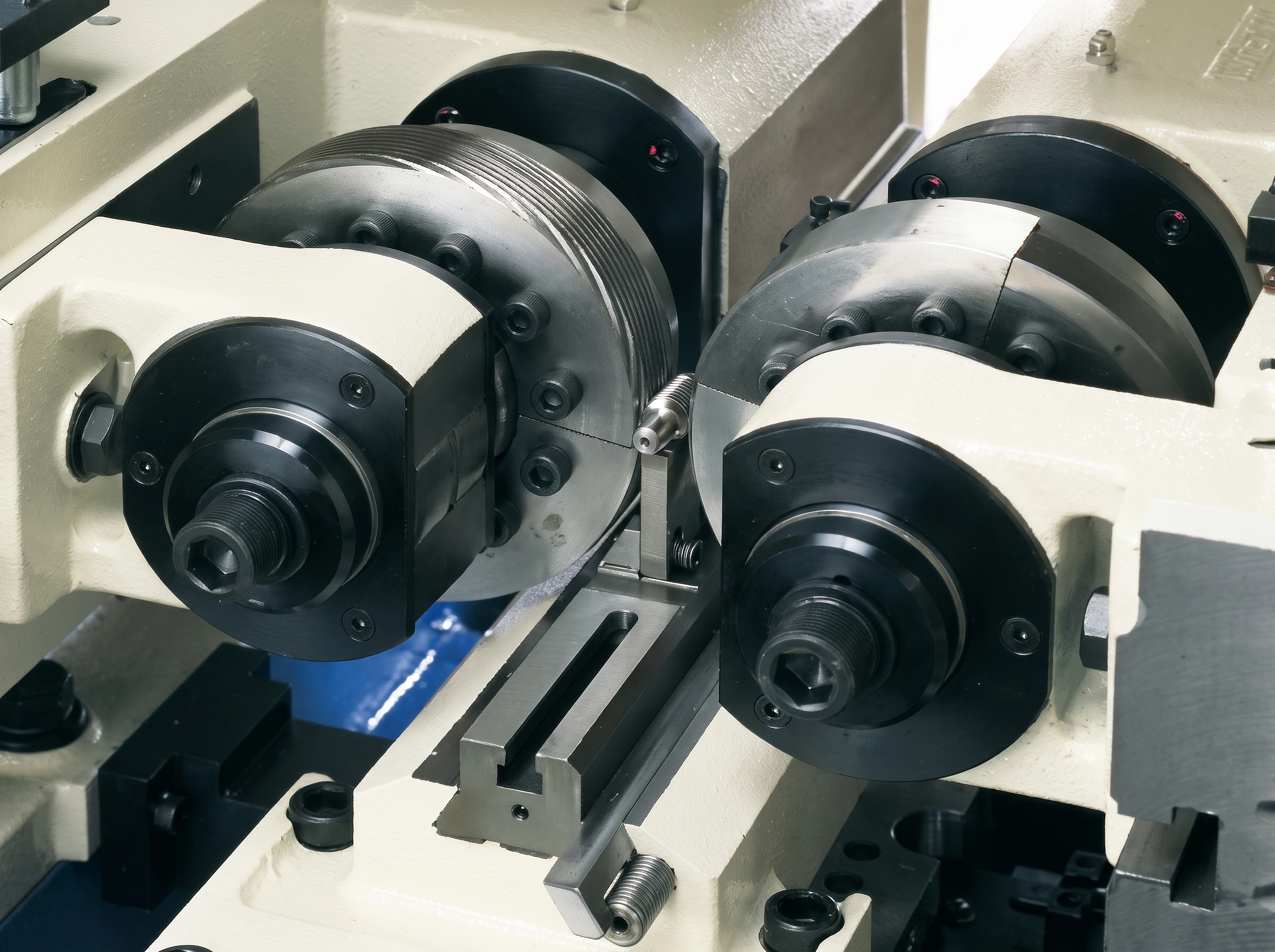
Cold thread rolling Grain-flow schematic — illustrative, not a micrograph.
Continuous grain flow along the flanks Material is displaced, not removed. The grain follows the thread profile and stays unbroken from shank to crest.
Work-hardened flanks, +30% fatigue life Rolling compresses the surface as it forms the thread, so the hardest layer lands exactly where the load does.
Ra 0.2–0.4 µm mirror-smooth flanks Lower friction, repeatable preload and reduced galling during assembly.
Formed thread roots Pressure forms the thread without the cutting-tool marks that can act as crack origins under cyclic vibration. CONVENTIONAL
Cut thread Grain-flow schematic — illustrative, not a micrograph.
Interrupted grain flow Turning severs the grain at every flank, interrupting the fibre structure along the load path.
Notch stress at the thread root The cut root and tool marks can concentrate stress when the joint is loaded.
Fatigue under vibration Cracks can start at the root and propagate under repeated loading.
Rougher flanks, higher galling risk Tool marks can raise friction and torque scatter, and increase the chance of seizing during assembly. Same envelope, longer service life — or the same life in a smaller envelope.